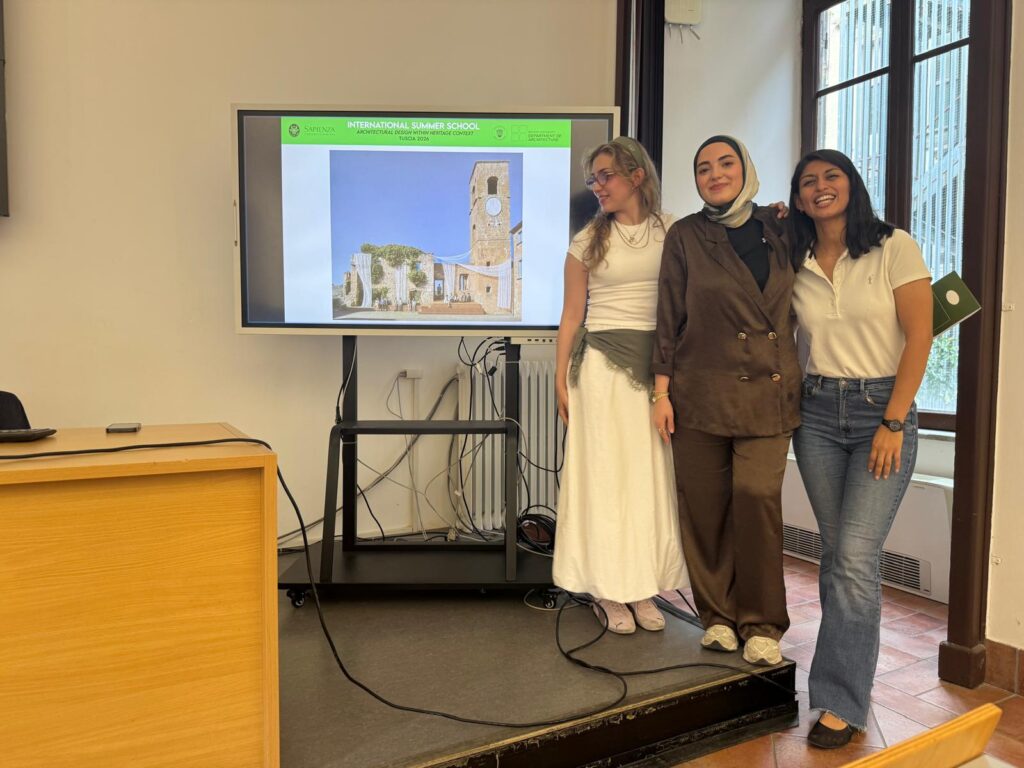
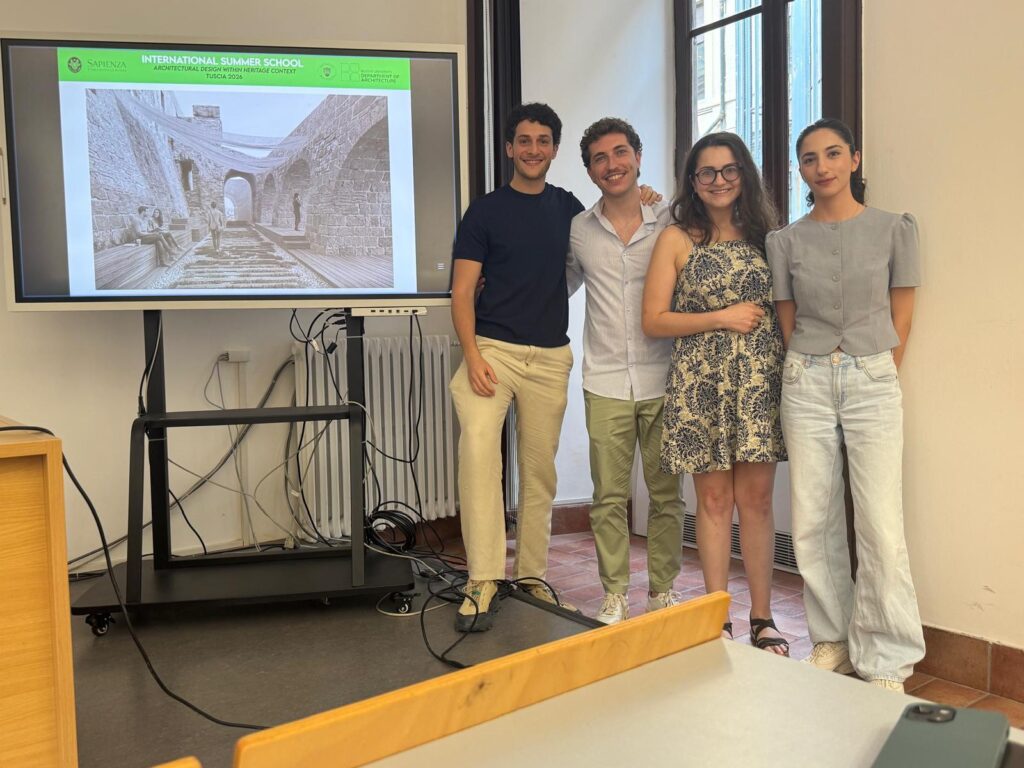
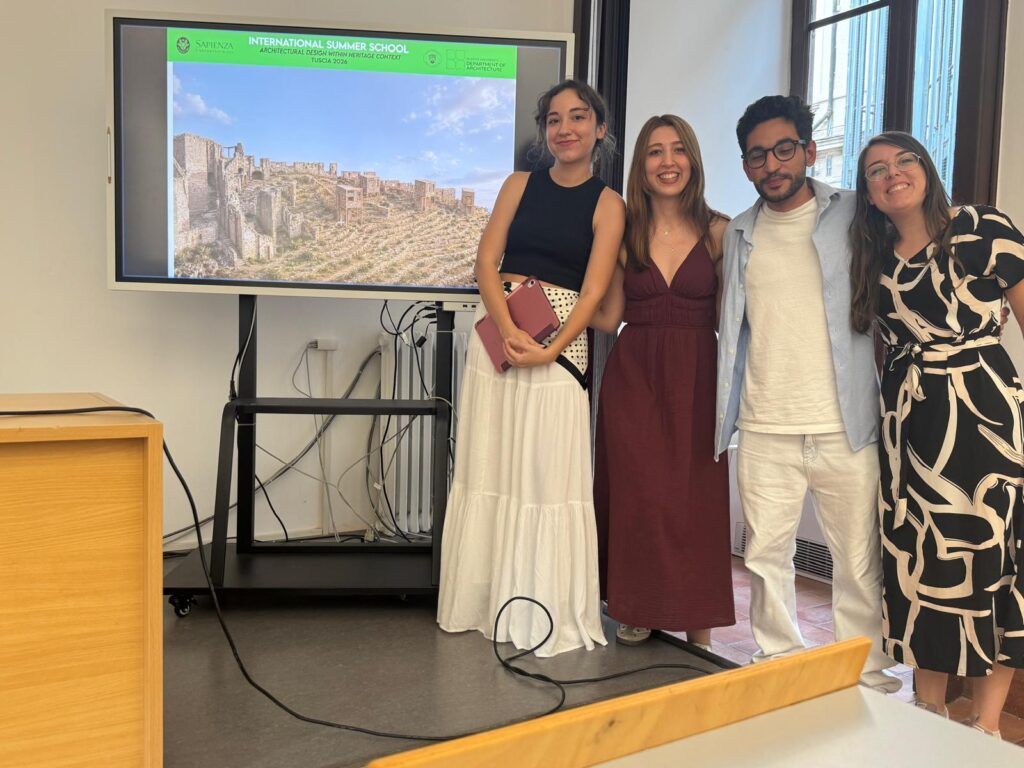
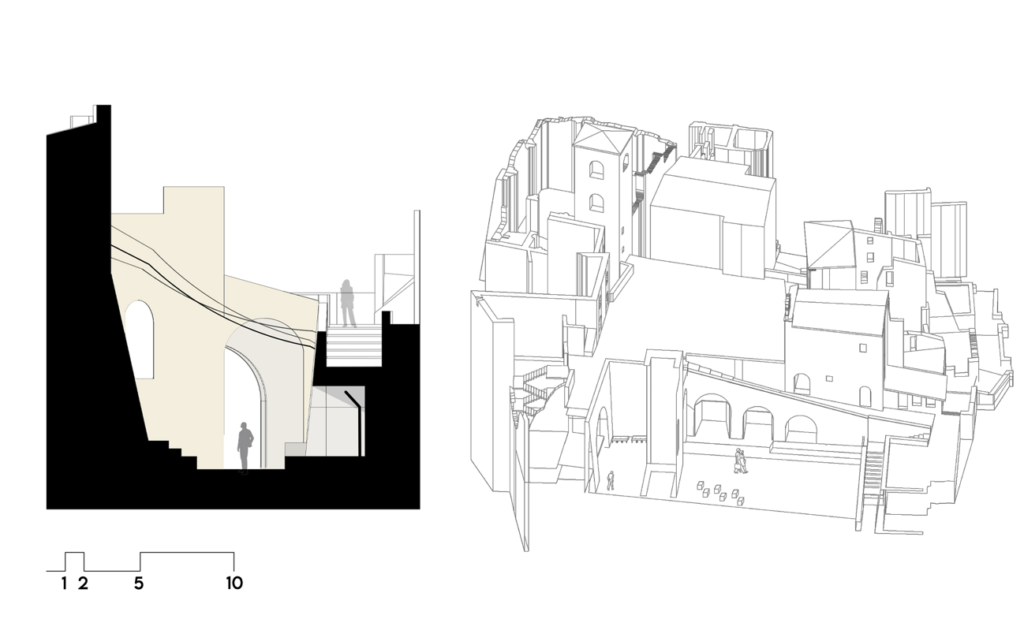
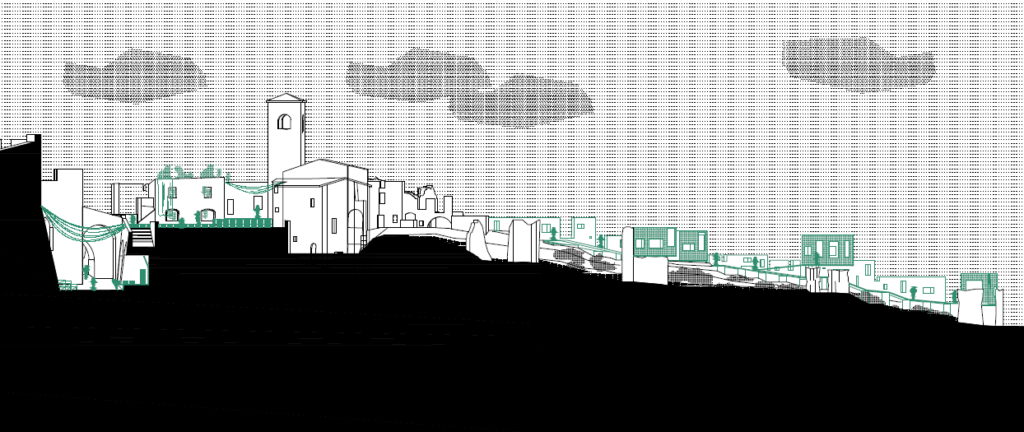
The “International Summer School: Architectural Design in Historical Context – Tuscia 2026” is a design workshop organized by the Department of Civil, Building and Environmental Engineering (DICEA) at Sapienza University of Rome. Set within the Tuscia region of northern Lazio—an area of extraordinary cultural and historical significance—the summer school brings together Italian and Turkish students for an experience of applied research and international cooperation. The program focuses on the regeneration of Celleno Vecchia, a small abandoned settlement that has already been the subject of design research conducted by the workshop organizers in collaboration with the Municipal Administration.
The initiative unites professors, visiting scholars, researchers, PhD students, and students from Sapienza University of Rome with professors and students from Bilkent University in Ankara. Through fieldwork and design exercises, participants confront the challenges of abandonment that face this “ghost village,” working to enhance its cultural identity and preserve the remaining traces of its historic structures.
The tutor working team was led by Maria Argenti and Anna Bruna Menghini, with Filippo Montorsi, Alessandra Romoli, Lavinia Tommasoli, and Emiliano Zandri (Sapienza University), alongside Giorgio Gasco (Bilkent University), Alejandro Leal Menegus (National Autonomous University of Mexico), and Önder Aydın (Gazi University). The participating students were Maria Di Stefano, Alessandra Marino, Leonardo Rizzi, Gianmarco Rosella, Karen Dayane Sarabia Bustamante, and Filippo Sarrecchia (DICEA); Beyza Çetin, Şevval Çuhadar, Betül İlayda Ebrinç, Dilay Özmutlu, and Rüya Uzun (BUDA); and Miray Beyza Aydoğan (Master’s, Sapienza).
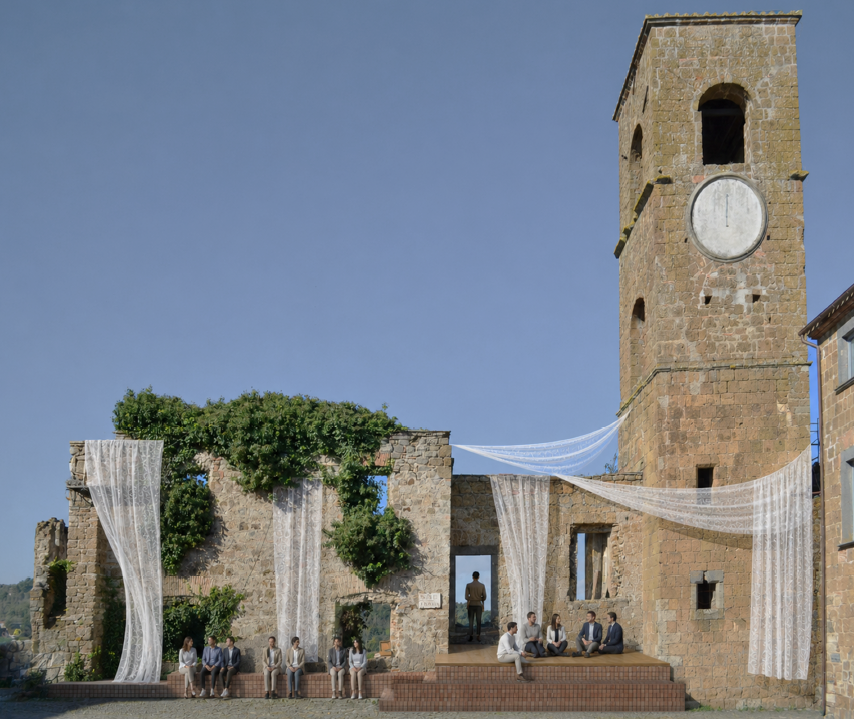
At the heart of the workshop is the exploration of new scenarios for the settlement’s future. Students from both institutions collaborate on simple, targeted, and sustainable design strategies based on the introduction of micro-architectures and temporary, reversible, low-impact installations intended to host cultural and social activities. Conceived to reactivate public space gradually, these interventions aim to encourage new ways of experiencing the village and to imagine sustainable futures for a place shaped by its own history.
The program was enriched by a series of lectures delivered by Maria Argenti (DICEA), Giorgio Gasco (BUDA), Alejandro Leal Menegus (UNAM), Anna Bruna Menghini (DICEA), Filippo Montorsi (DICEA), Alessandra Romoli (DICEA), and Emiliano Zandri (DICEA), offering participants critical insights into the architectural history, design potentials, and regeneration strategies relevant to the region.
Through its collaborative and interdisciplinary format, the summer school not only enriched the academic experience of its participants but also contributed to a broader discourse on architectural design in culturally sensitive contexts.
Tutor working team: Maria Argenti, Anna Bruna Menghini with Filippo Montorsi, Alessandra Romoli, Lavinia Tommasoli, Emiliano Zandri (Sapienza University); Giorgio Gasco (Bilkent University);
Alejandro Leal Menegus (National Autonomous University of Mexico) Önder Aydin (Gazi University)
Students: Maria Di Stefano, Alessandra Marino, Leonardo Rizzi, Gianmarco Rosella, Karen Dayane Sarabia Bustamante, Filippo Sarrecchia (DICEA); Beyza Çetin, Şevval Çuhadar, Betül İlayda Ebrinç, Dilay Özmutlu, Rüya Uzun (BUDA), Miray Beyza Aydoğan (Master Sapienza)
Lectures: Maria Argenti (DICEA); Giorgio Gasco (BUDA); Alejandro Leal Menegus (UNAM); Anna Bruna Menghini (DICEA); Filippo Montorsi (DICEA); Alessandra Romoli (DICEA); Emiliano Zandri (DICEA)